
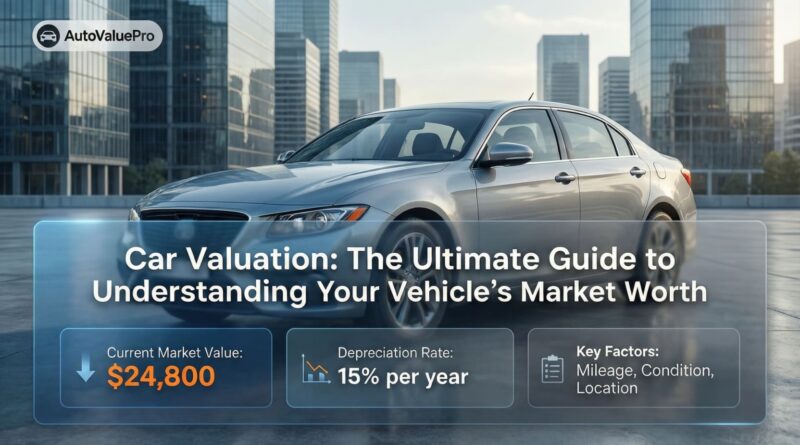
Car Valuation: The Guide to Understanding Your Vehicle’s Market Worth
Understanding car valuation is essential whether you are looking to sell, trade-in, or insure a vehicle. A precise valuation ensures you do not leave money on the table during a sale or overpay when purchasing. This guide explores the technical factors, methodologies, and market variables that dictate a car’s financial standing.
What is Car Valuation?
Car valuation is the process of determining the current “Fair Market Value” (FMV) of a vehicle. Unlike fixed assets, vehicles are depreciating assets, meaning their value decreases over time due to wear, age, and market saturation.
Key Valuation Categories:
- Trade-in Value: What a dealer will offer you toward the purchase of another car. This is typically the lowest value due to the dealer’s need for a resale margin.
- Private Party Value: The price a buyer is willing to pay an individual seller. This is usually higher than trade-in but lower than retail.
- Dealer Retail Value: The price a consumer pays at a dealership, including reconditioning costs and warranties.
- Certified Pre-Owned (CPO) Value: Premium pricing for used vehicles that have undergone rigorous inspection and come with extended manufacturer warranties.
Primary Factors Influencing Car Valuation
To reach an accurate car valuation, several data points must be analyzed. These are the variables that professional appraisers and algorithmic tools prioritize:
1. Mileage and Age
Mileage is the primary indicator of mechanical wear. The industry average is approximately 12,000 to 15,000 miles per year. Exceeding this “normal” range significantly lowers the valuation, as it implies a shorter remaining lifespan for major components like the engine and transmission.
2. Service History and Documentation
A vehicle with a complete, documented service history from authorized centers can command a premium of 10-15% over a similar vehicle with no records. It proves the owner followed the manufacturer’s maintenance schedule, reducing the risk of “hidden” mechanical failures.
3. Physical and Mechanical Condition
Valuations are typically categorized into four grades:
- Excellent: No defects, original paint, perfect interior, and passed all mechanical tests.
- Good/Very Good: Minor cosmetic wear (small chips/scratches), no major mechanical issues.
- Fair: Visible wear, perhaps needing tires or minor repairs, but still safe to drive.
- Poor: Significant mechanical or structural issues; often valued at “salvage” or “scrap” rates.
4. Market Trends and Seasonality
External factors play a massive role.
- Fuel Prices: High gas prices lower the valuation of SUVs and trucks while boosting the value of hybrids and EVs.
- Seasonality: Convertibles value peaks in spring/summer, while AWD SUVs see higher demand in late autumn.
Technical Methods of Valuation
There are three primary ways to determine a car’s value in the current market:
Online Valuation Tools
Algorithms use “Big Data” to compare millions of recent sales records. By entering a Vehicle Identification Number (VIN) or license plate, these tools provide an instant estimate based on regional trends.
Professional Appraisal
A physical inspection by a certified appraiser. This is often necessary for high-end luxury cars, classics, or modified vehicles where standard algorithms fail to account for unique upgrades or rare specifications.
The Comparison Method (Comps)
Looking at similar listings on platforms like AutoTrader or Cars.com. To be accurate, you must look at sold prices, not asking prices, as asking prices often reflect seller optimism rather than market reality.
Understanding the Depreciation Curve
Most new cars lose about 20% of their value in the first year and roughly 60% by the end of year five.
| Year of Ownership | Estimated Residual Value |
| Brand New | 100% |
| Year 1 | 80% |
| Year 3 | 60% |
| Year 5 | 40% |
Note: These figures vary by brand. Brands with high reliability ratings (e.g., Toyota, Porsche) tend to have slower depreciation rates.
How to Maximize Your Car’s Resale Value
If you are preparing for a car valuation for sale purposes, follow these steps to ensure the highest possible figure:
- Professional Detailing: A clean car suggests a well-maintained engine. Focus on odor removal and paint correction.
- Fix Minor Issues: Replace burnt-out bulbs, cracked mirrors, or worn tires. The cost of repair is often lower than the “deduction” a buyer will take for the defect.
- Gather Paperwork: Organize all receipts, the V5C (or title), and spare keys.
- Check for Recalls: Ensure all manufacturer recalls have been addressed. Unresolved recalls are a significant red flag for professional buyers.
Summary
Car valuation is not a static number but a range influenced by data, condition, and timing. By understanding the mechanics of depreciation and the importance of maintenance records, you can accurately position your vehicle in the market to achieve the best financial outcome.
